

Documentation Index
Fetch the complete documentation index at: https://basedash.com/docs/llms.txt
Use this file to discover all available pages before exploring further.
Members can now be deactivated and reactivated
Admins can now deactivate a member without permanently deleting their account history. This gives you a cleaner way to temporarily remove access when someone changes roles, goes on leave, or no longer needs the product day to day. You can also reactivate that member later, which makes this much more practical than a delete-and-recreate flow. Existing ownership and linked data stay intact, so team administration is less disruptive when access changes over time.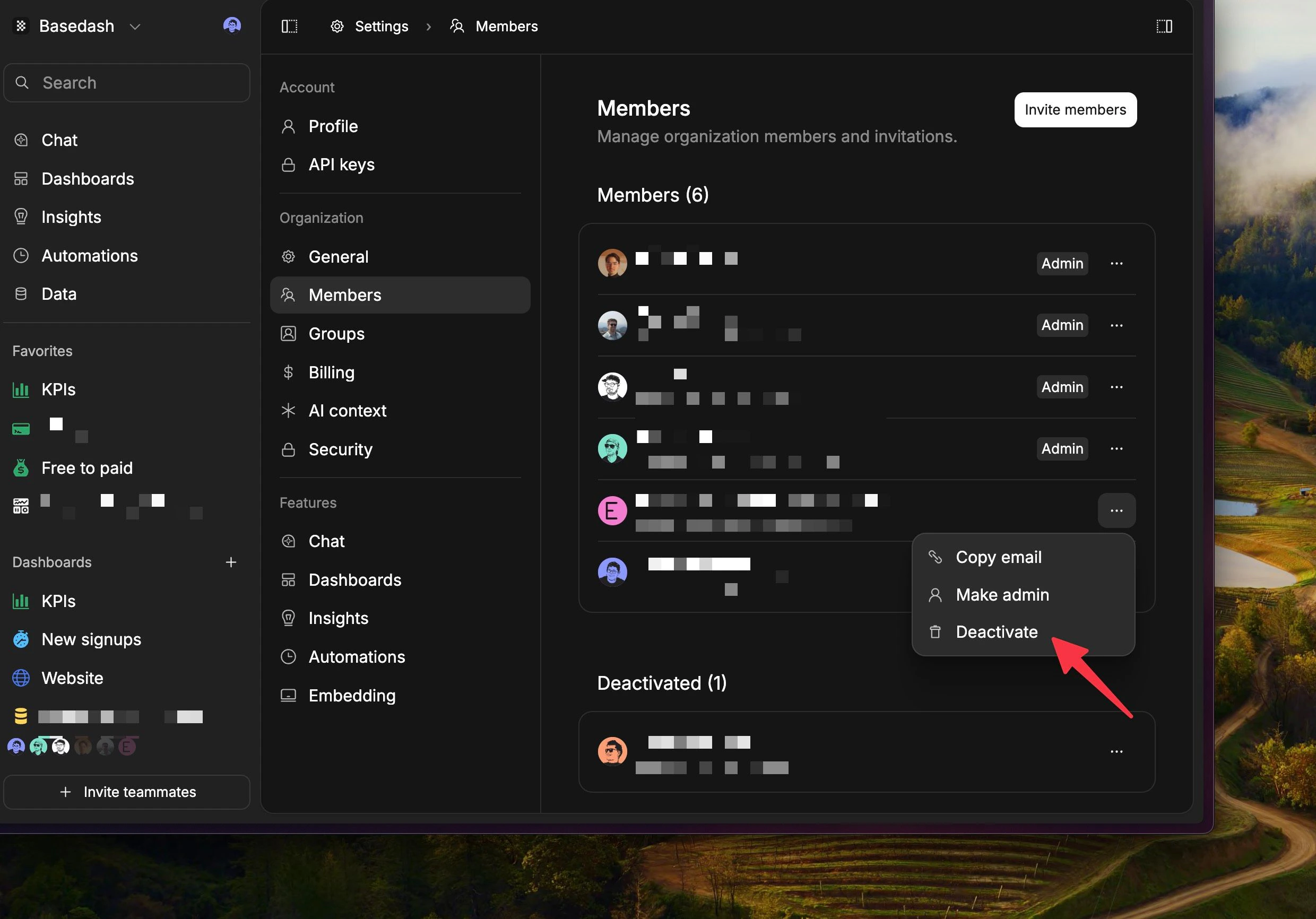
Slack can now use approved tools
Slack conversations can now use MCP tools, which means Basedash can do more than just answer questions in Slack. When a tool needs approval, the approval flow happens right in Slack so you can keep moving without jumping back into the app. We also extended tool access to background automations for tools that are explicitly allowed to run automatically. Taken together, this makes AI workflows feel more useful across both real-time Slack conversations and scheduled work.Dashboards are easier to organize
Dashboards and folders are now easier to manage from the sidebar. You can quickly create folders from the dashboards page, reorder dashboards with a list-based drag-and-drop layout, and see cleaner folder nesting that makes larger workspaces easier to scan. We also reduced some of the friction around navigation and sharing. Favorited dashboards still stay visible in the main dashboards list, and share buttons now show the current visibility state at a glance before you even open the menu.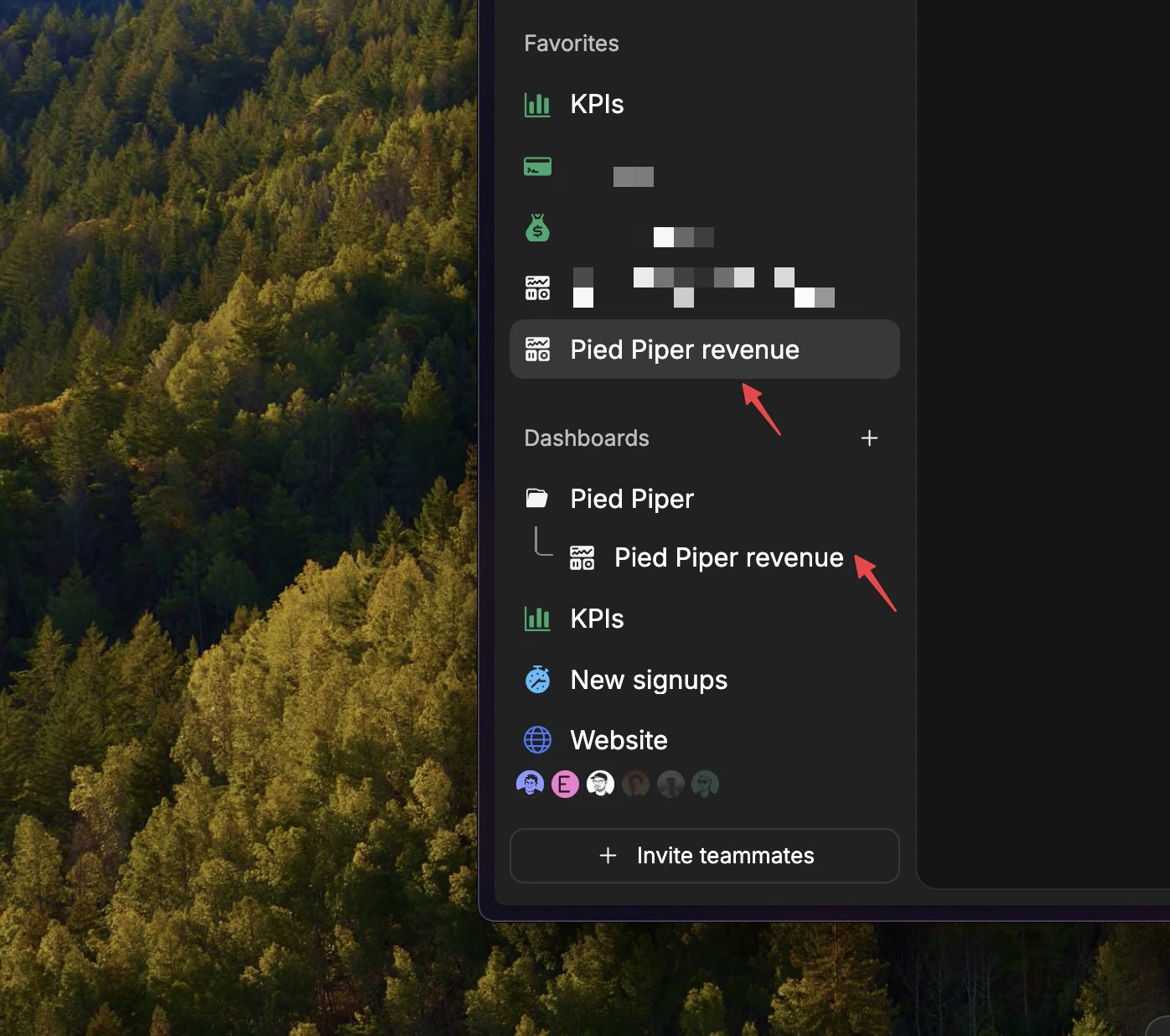
Fixes and improvements
- Improved connection and table browsing with clearer breadcrumbs, easier settings access, and status dots for SQL databases and MCP servers.
- Improved chat and automation reliability so responses are less likely to stay stuck on “Generating…” when many automation runs are open.
- Fixed PDF exports for funnel charts and newer Tailwind color styles.
- Fixed DuckDB and S3 date handling so charts and AI see readable timestamps and dates.
- Fixed DuckDB
PRAGMA table_info(...)andSHOW ALL TABLESqueries when they include trailing semicolons. - Fixed Data page record counts for DuckDB and S3 tables.
- Improved reliability for databases with strict connection limits by reducing default connection pool pressure.
- Fixed multi-select chart variable defaults so saved values behave more consistently.
- Added Redshift support for SSH connections.