Introducing Basedash SCIM
Max Musing
 Max MusingFounder and CEO of Basedash
· July 11, 2026
Max MusingFounder and CEO of Basedash
· July 11, 2026
Max Musing
Max MusingFounder and CEO of Basedash
· July 11, 2026
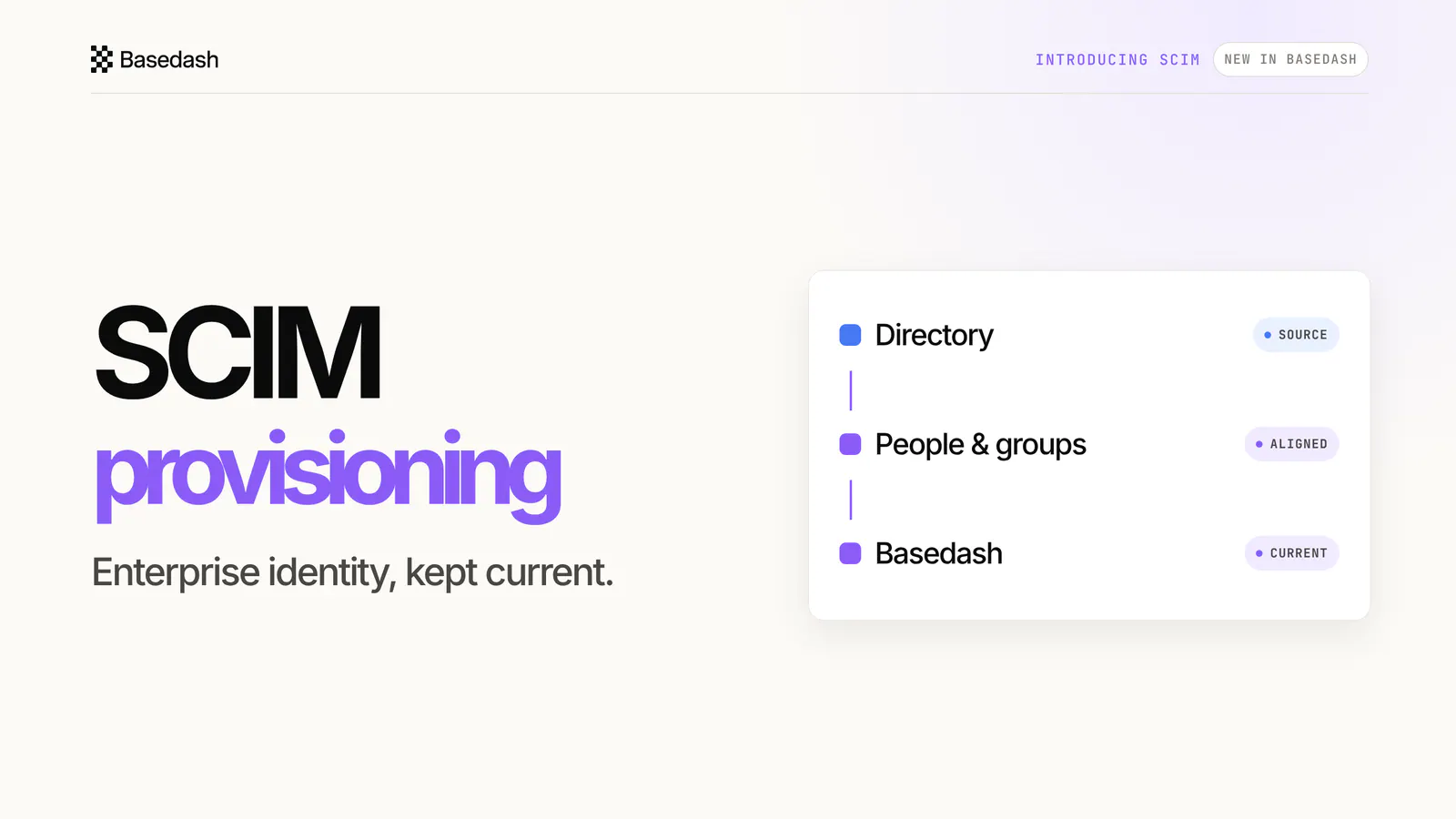
Today we’re launching SCIM provisioning for Basedash, a new enterprise control that keeps the user and group lifecycle aligned with the identity provider your organization already trusts.
For Heads of BI and VPs of Data, SCIM shows that Basedash can roll out across a changing organization without turning the data team into the manual access-management layer.
Analytics rollouts rarely stay small. As more teams need answers and more people need governed access to data, each new user makes identity ownership more important.
Without a directory-driven lifecycle, the BI tool can drift from the organization around it. People change teams while old group memberships remain. Departing employees can stay active longer than intended. IT, security, or the data team becomes responsible for repeating the same updates inside another application.
That creates three enterprise rollout risks at once: stale organization access, an administrative bottleneck, and more friction when security reviewers ask who controls the user lifecycle.
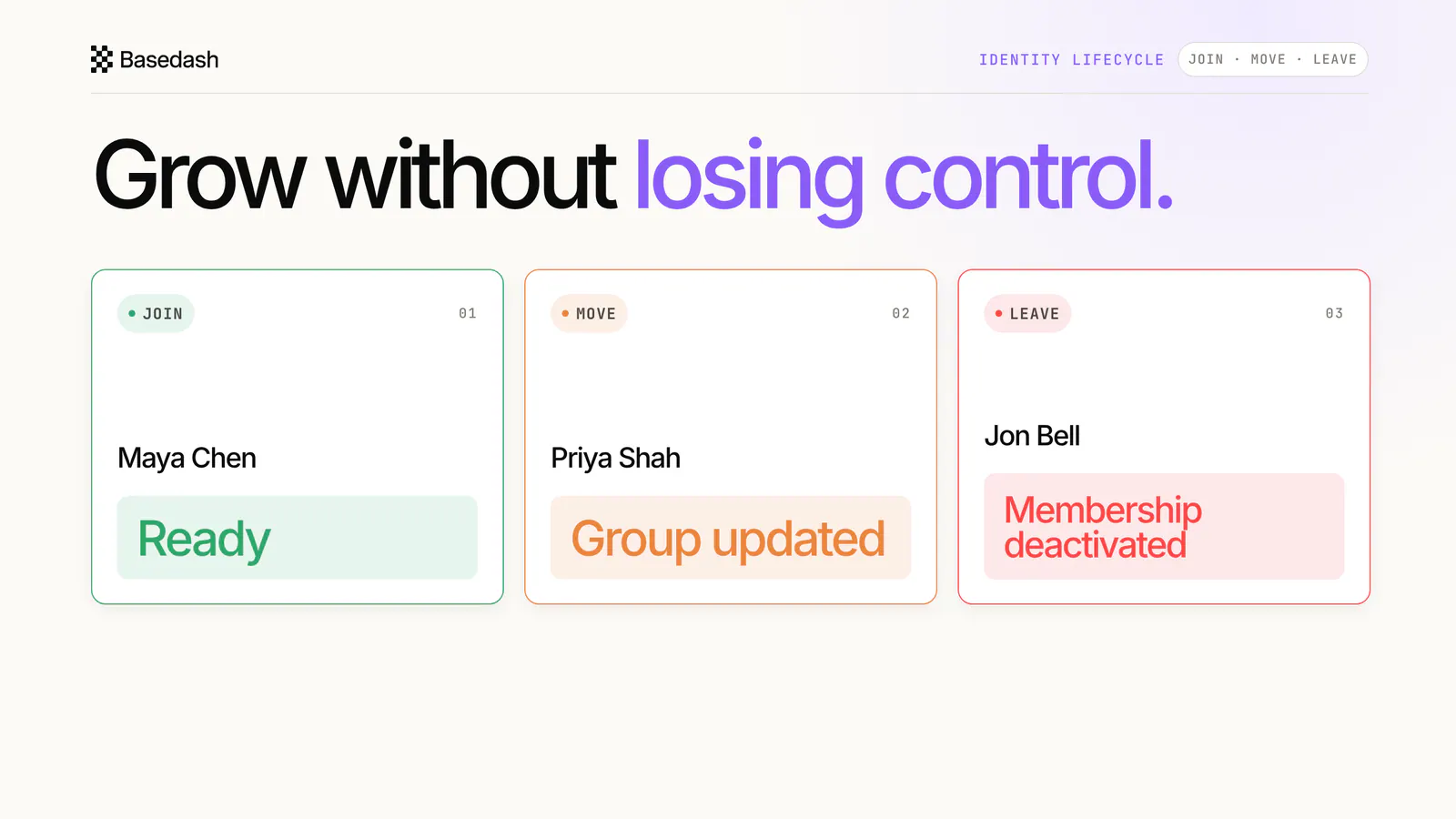
Enterprise identity readiness: directory-aligned users, groups, and organization membership.
SCIM lets Basedash follow supported provisioning changes from Okta, Microsoft Entra ID, and other compatible SCIM 2.0 providers. As the organization changes, the identity lifecycle can change with it:
Data leaders don’t have to become the app-by-app identity administrator. Analytics can reach more people while the directory remains the source of truth for who belongs.
SCIM synchronizes users, groups, and group memberships. That makes ownership clear: the identity provider controls who belongs to the organization and its synced groups.
Resource permissions remain a separate Basedash decision. A Basedash admin chooses which data sources, dashboards, and other resources each group can access. SCIM does not provision administrator roles or directly assign those permissions.
This separation gives enterprise teams both automation and control:
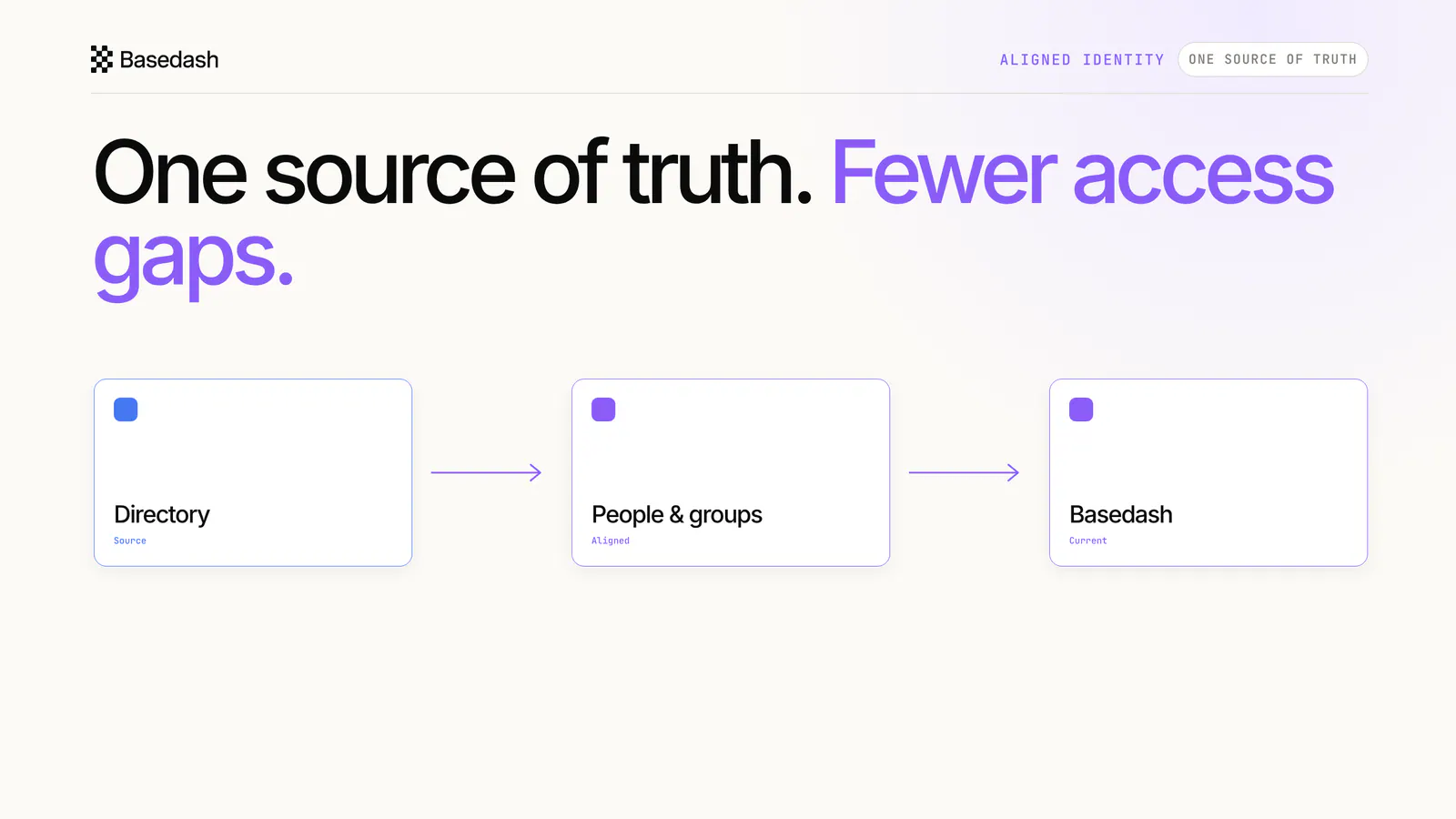
One source of truth for identity, with resource permissions controlled in Basedash.
SCIM is one layer in Basedash’s enterprise control stack:
Each layer has a distinct job. SCIM strengthens identity lifecycle management without replacing the authentication, authorization, and data controls around it or assigning resource permissions.
Together, these controls give data and security leaders a clearer model for enterprise rollout: central identity, explicit authorization, and governed data access.
At a high level, the flow is:
Directory → SCIM → Basedash
Your organization manages users and groups in Okta, Microsoft Entra ID, or another compatible identity provider. SCIM sends supported user, group, membership, and active-status changes to Basedash. Basedash reflects those identity changes while admins continue to manage resource permissions separately.
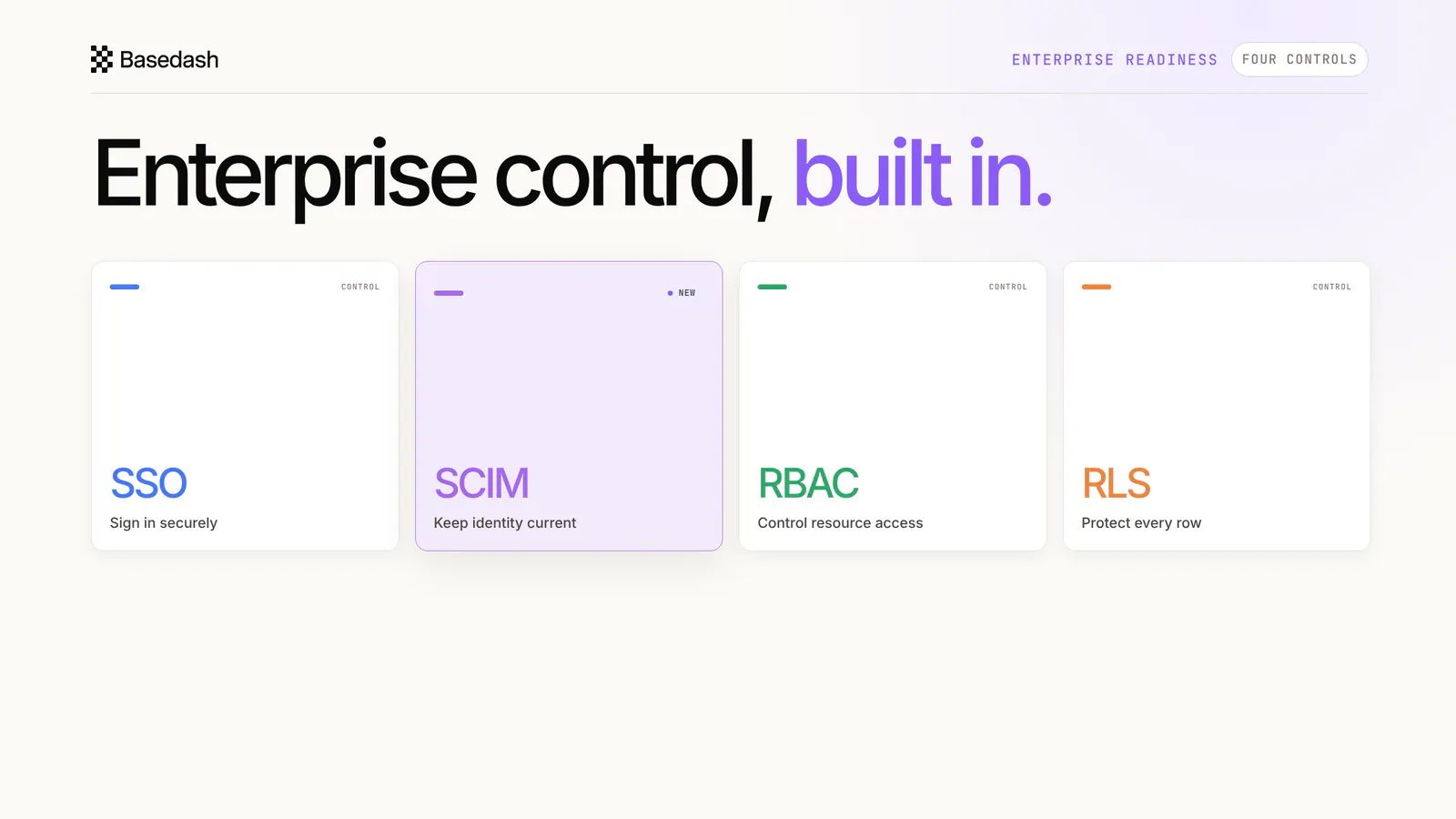
SCIM joins SSO, RBAC, and row-level security in the Basedash enterprise control stack.
SCIM is available on the Basedash Enterprise plan. Talk to the Basedash team to plan your rollout, or follow the SCIM setup guide when your administrators are ready to configure a compatible identity provider.
You can also explore Basedash’s broader enterprise controls and security model.
With SCIM, you can grow analytics across your organization and keep control of who belongs.
Written by

Founder and CEO of Basedash
Max Musing is the founder and CEO of Basedash, an AI-native business intelligence platform designed to help teams explore analytics and build dashboards without writing SQL. His work focuses on applying large language models to structured data systems, improving query reliability, and building governed analytics workflows for production environments.
Basedash lets you build charts, dashboards, and reports in seconds using all your data.