
Robert Cooper
Senior Software Engineer
Robert Cooper is a senior engineer who builds full-stack product systems across SQL data infrastructure, APIs, and frontend architecture. His work focuses on application performance, developer velocity, and reliable self-hosted workflows that make data operations easier for teams at scale.
Posts by Robert Cooper

Row level security now available
Basedash now supports Postgres Row‑Level Security (RLS). Use the basedash.groups session variable to restrict rows per user or team across chats, charts, automations, Slack, and the Basedash Warehouse.

How We Built Light Mode Without Tailwind’s dark: Class
Skip Tailwind’s dark: modifier. Learn how Basedash uses CSS variables, global state, and zero-flicker theming for a scalable light/dark mode system.

Aurora vs. MySQL: A Comprehensive Guide
Amazon Aurora and MySQL are two popular database services, each with unique features and use cases. While Aurora is a cloud-native database optimized for.

Automating PostgreSQL Materialized View Refreshes for Optimal Performance
Materialized views in PostgreSQL store the result of a complex query physically, optimizing query performance significantly.

Best ETLs for MySQL
ETL tools are essential if you want to properly manage data in MySQL databases. We’ve selected a couple of the best ones in this guide.

BigQuery vs MySQL: A Comprehensive Guide
BigQuery and MySQL are two powerful data management systems widely used in the tech industry. BigQuery, a serverless, highly scalable, and cost-effective.

How to Alter Materialized Views in PostgreSQL
Materialized views in PostgreSQL are an efficient way to store query results physically, drastically improving performance for complex queries or.

How to Create a Materialized View in MySQL
A materialized view is a database object that contains the results of a query. It’s similar to a regular view, except that the data is physically stored.
How to Divide Two Columns in SQL
In SQL, dividing two columns is a common operation used for calculating ratios or percentages. This guide demonstrates how to perform division between two.

How to Do an Unpivot in MySQL
Unpivoting in MySQL involves transforming columns into rows, effectively normalizing data that was previously denormalized.
How to Drop a Materialized View in PostgreSQL
Secondary keywords: postgres drop view Materialized views in PostgreSQL offer a robust method for speeding up access to aggregated data by physically.
How to enable row-level security (RLS) in PostgreSQL
Row-level security (RLS) is a feature in PostgreSQL that allows you to define policies to restrict access to individual rows in a table.

How to Format Number With Commas in MySQL
Formatting numbers with commas in MySQL is a practical way to convert numerical data into a more readable, formatted string, particularly for large.

How to Get Yesterday's Date in MySQL
Retrieving yesterday's date in MySQL requires you to use the CURDATE() or NOW() functions combined with the INTERVAL keyword.

How to Group By Hour in MySQL
Grouping data by hour in MySQL involves extracting the hour part from a datetime or timestamp column and using it in a GROUP BY clause.
Managing Views in PostgreSQL for Simplified Queries and Enhanced Performance
Secondary keywords: postgres create view create view postgres how to view postgres database Understanding and managing views in PostgreSQL can.

MySQL: Transpose Rows to Columns
Transposing rows to columns in MySQL involves reshaping data so that rows become columns, often for improved readability and data analysis.
MySQL vs Snowflake: A Comprehensive Guide
MySQL and Snowflake are prominent players in the database management landscape, each with unique strengths.
Optimizing PostgreSQL View Performance: A Practical Guide
PostgreSQL views act as virtual tables representing the results of stored queries. They simplify complex queries, improve readability, and ensure data.
Overview: MySQL Last 30 Days
MySQL, a widely-used open-source relational database management system, often requires querying data based on time intervals.
Percent in MySQL: An Overview
Dealing with percentages in MySQL involves various operations like formatting data as a percent, calculating percentiles, and determining the top.

Pivot Tables in MySQL
A pivot table in MySQL will transform rows into columns. It’s a solid way to generate reports. This post dives into how it works so you can display.
Postgres: View vs Materialized View - Choosing the Right One
Postgres offers two distinct types of views: standard views and materialized views. Standard views operate as virtual tables that reflect real-time data.
Redshift vs MySQL
Redshift and MySQL are both popular databases, but they serve different purposes. Redshift is a fully managed, petabyte-scale data warehouse service by.

Rolling Average in MySQL
A rolling average, also known as a moving average, is a statistical technique used to analyze time-series data by creating a series of averages of.
Standard Deviation in MySQL
MySQL offers several functions for statistical analysis. One of them is the standard deviation, which measures the amount of variation or dispersion in a.

Our TypeScript monorepo setup
Discover how Basedash uses a TypeScript monorepo with yarn workspaces, shared configs, tRPC, and turborepo to enable code sharing and efficient builds.

Implementing Re-Ordering at the Database Level: Our Experience
Learn how Basedash simplified sidebar page re-ordering by switching from integer indices to floating-point values. Discover the challenges, solutions, and best practices they uncovered.

Why we had to move away from React Query
Discover how Basedash left React Query behind for a more robust Redux setup. Explore the benefits of normalized state, fewer bugs, and improved scalability.
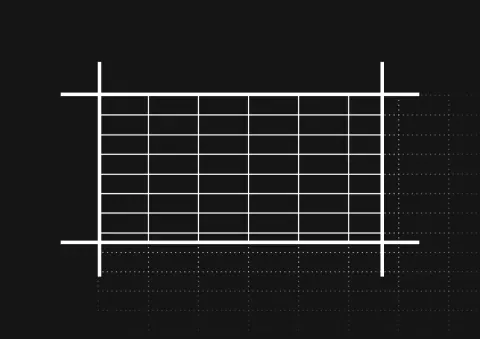
How virtualization increased our table performance by 500%
Learn how Basedash overcame table-performance challenges using React optimizations, virtualization, and strategic rendering. Discover their 4–5x speed improvements and key takeaways.

Optimizing REST API calls
How we migrated to React Query and reworked our API routes to reduce data-fetching calls by half and cut initial page-load data by 3x.