
How to analyze an A/B test with SQL
Analyze an A/B test with SQL: count users and conversions per variant, calculate lift, run a two-proportion z-test, and avoid the mistakes that fake wins.
 Max MusingFounder and CEO of Basedash
This page is available in Français.
This page is available in Español.
This page is available in Português (Brasil).
Analyze an A/B test with SQL: count users and conversions per variant, calculate lift, run a two-proportion z-test, and avoid the mistakes that fake wins.
Max MusingFounder and CEO of Basedash
Window functions calculate across related rows without collapsing them, which is how you write running totals, rankings, and period-over-period growth in SQL.
Max MusingFounder and CEO of BasedashAn OKR dashboard shows each key result's baseline, target, current value, and pace against live data. Learn how to build one that updates itself, not by hand.
Max MusingFounder and CEO of Basedash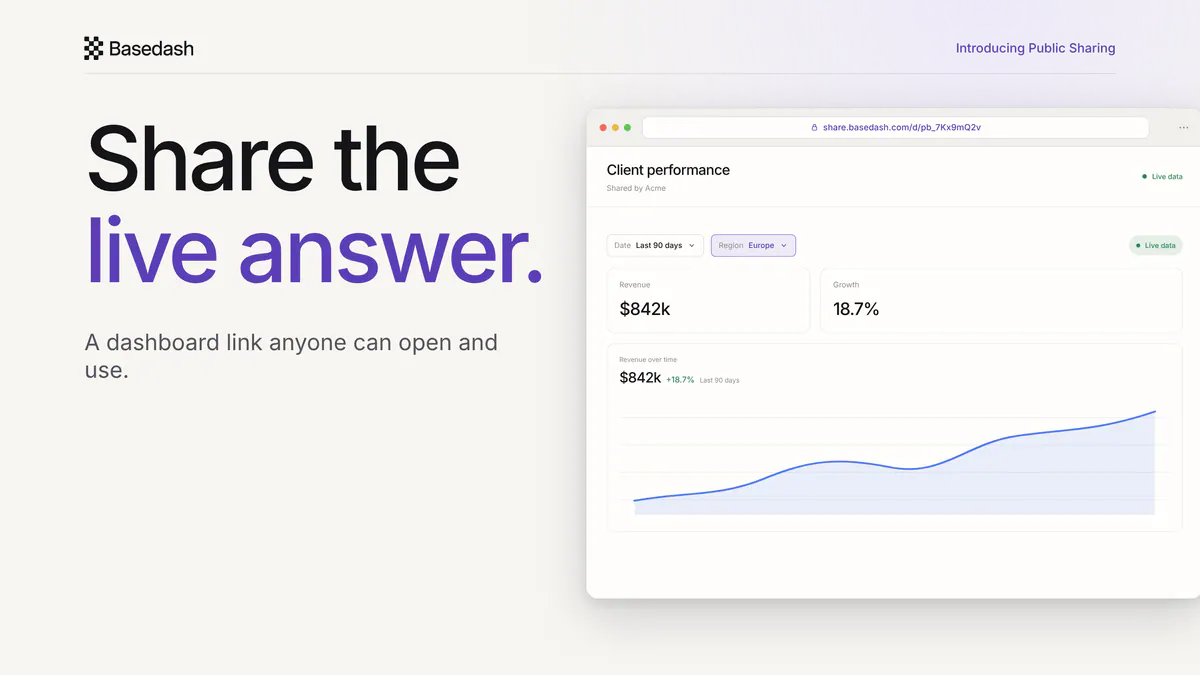
Send a live Basedash dashboard or chart to a client, investor, leader, or contractor with one link. They can open, filter, and sort it without a Basedash account.
Max MusingFounder and CEO of Basedash
“We evaluated Omni and other BI tools, but the speed to insight with Basedash is unmatched.”
Greg Demoge
Co-founder & CPO · FullEnrich

Read case study →

“For a security-conscious company like ours, Basedash instantly clicked. Reports that took weeks are ready in hours.”
Claudio Godoy
AI Agents Lead · Taxfyle

Read case study →

How to build dashboards on SQL Server: connect a BI tool safely, avoid blocking your production database, and choose live queries vs a read replica or copy.
Max MusingFounder and CEO of Basedash
Net revenue retention tracks recurring revenue kept and expanded from existing customers. Learn the NRR formula, how to calculate it in SQL, and benchmarks.
Max MusingFounder and CEO of Basedash
Most lean teams don't need a dedicated data catalog yet. Here's what one does, the signals that mean you actually need it, and a lightweight alternative.
Max MusingFounder and CEO of Basedash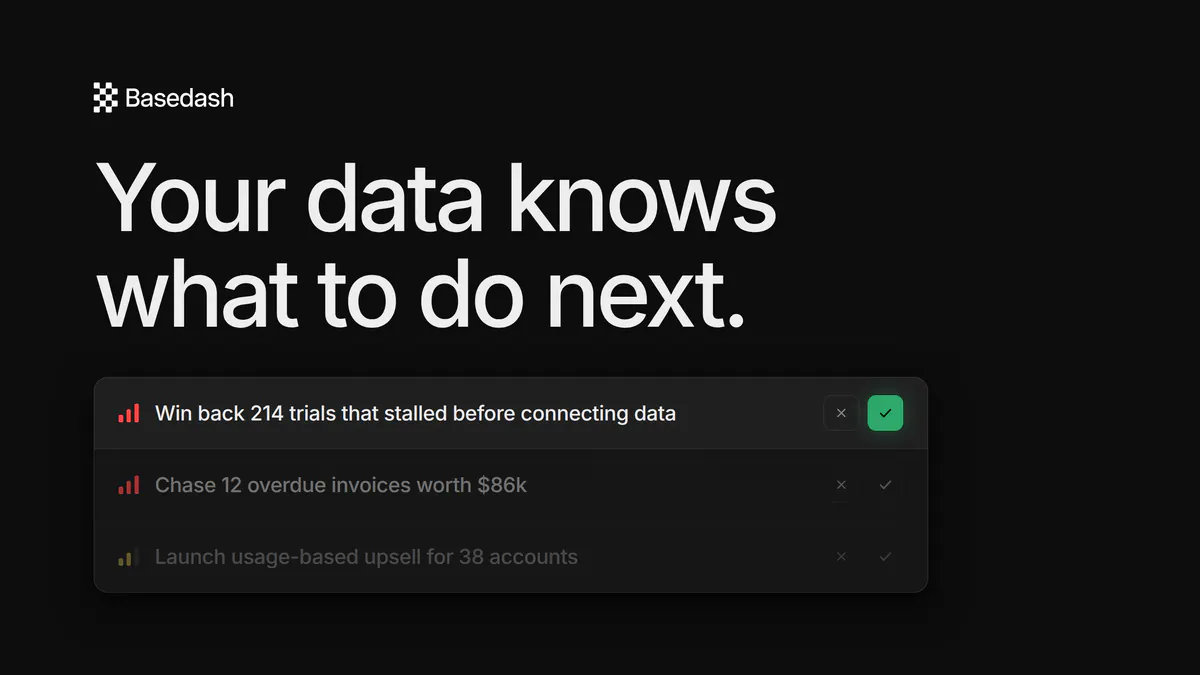
Tasks is AI that reads your company's real data and turns it into a prioritized to-do list — specific, actionable work with a why-now, an expected outcome, and instructions. Ship a task, and Basedash tracks how your metrics move and learns. Now in research preview.
Max MusingFounder and CEO of Basedash
A SQL query builder lets you build database queries without hand-writing SQL. Compare visual, code, and AI query building, and learn when to use each.
Max MusingFounder and CEO of Basedash
DAU, WAU, and MAU count unique active users over 1, 7, and 30 days. Learn how to define active, calculate each in SQL, and read the stickiness ratio.
Max MusingFounder and CEO of Basedash
How to build dashboards on Databricks: connect a BI tool to a SQL warehouse, the cold-start trap that makes dashboards feel broken, and how to control cost.
Max MusingFounder and CEO of BasedashProduct managers don't need to master SQL. Learn the five query patterns that answer most product questions, plus when to reach for a BI tool or AI instead.
Max MusingFounder and CEO of Basedash
Use a spreadsheet for quick, small, one-off analysis. Move to a database when data is shared, large, or a source of truth. Here's how to tell and migrate.
Max MusingFounder and CEO of Basedash
Data engineers build pipelines, analysts answer business questions, scientists model and predict, business analysts translate needs. Here's who to hire when.
Max MusingFounder and CEO of Basedash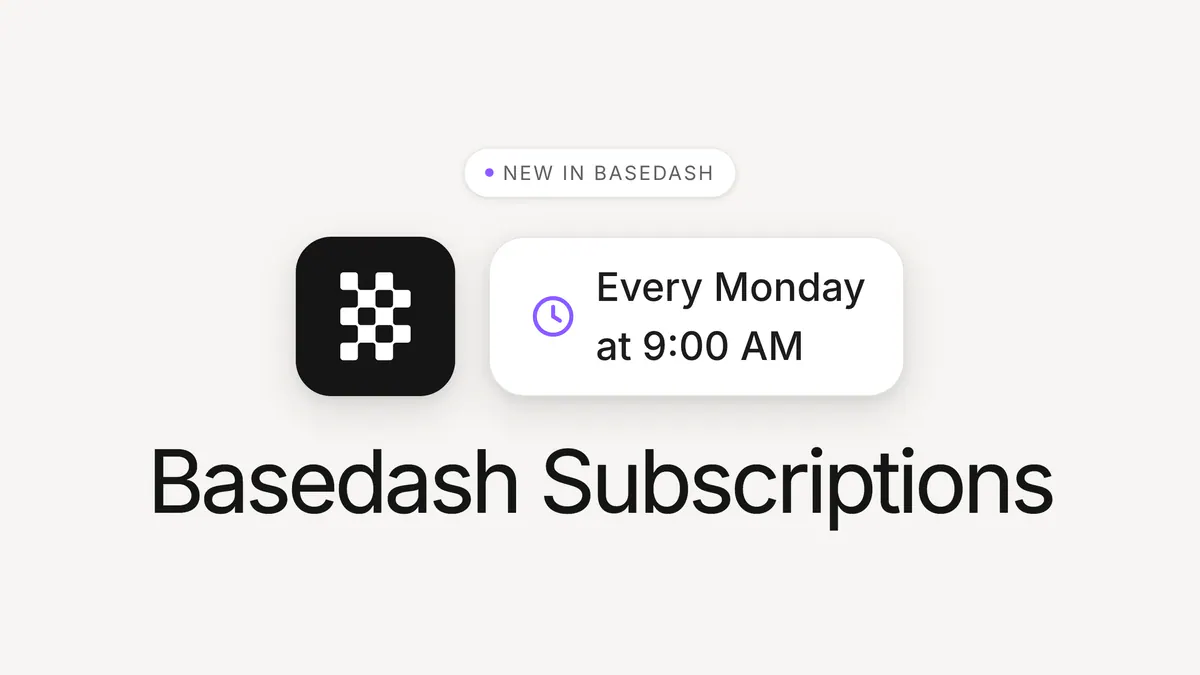
Subscribe to any dashboard or chart in Basedash and get a fresh snapshot delivered on a schedule — to your inbox or a Slack channel. Pick a cadence like every Monday at 9am, choose who receives it, and the report just shows up. Reports that come to you.
Max MusingFounder and CEO of Basedash
A data audit is a periodic review of what data and dashboards you have, who owns them, and whether they're accurate and actually used. Here's how to run one.
Max MusingFounder and CEO of Basedash